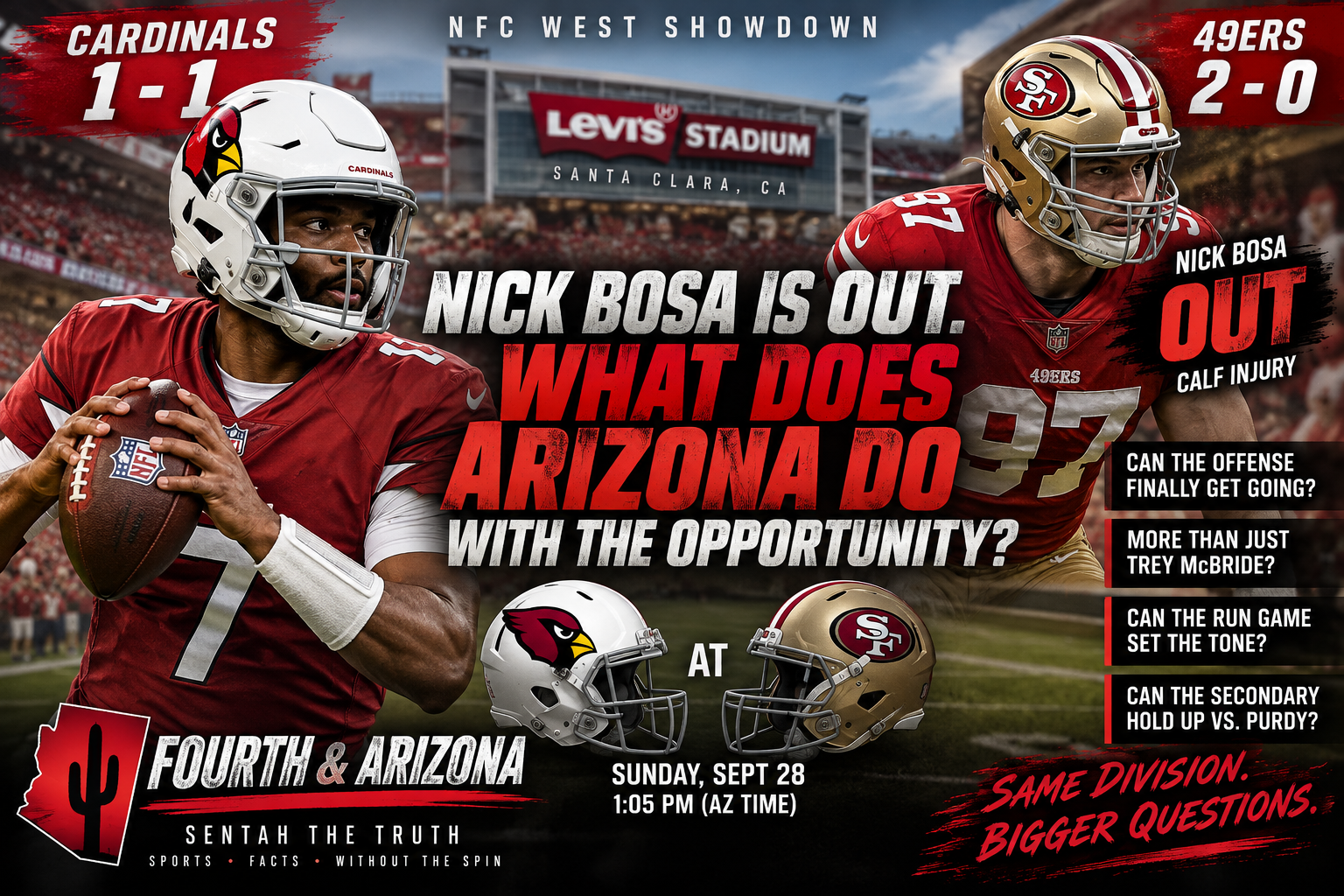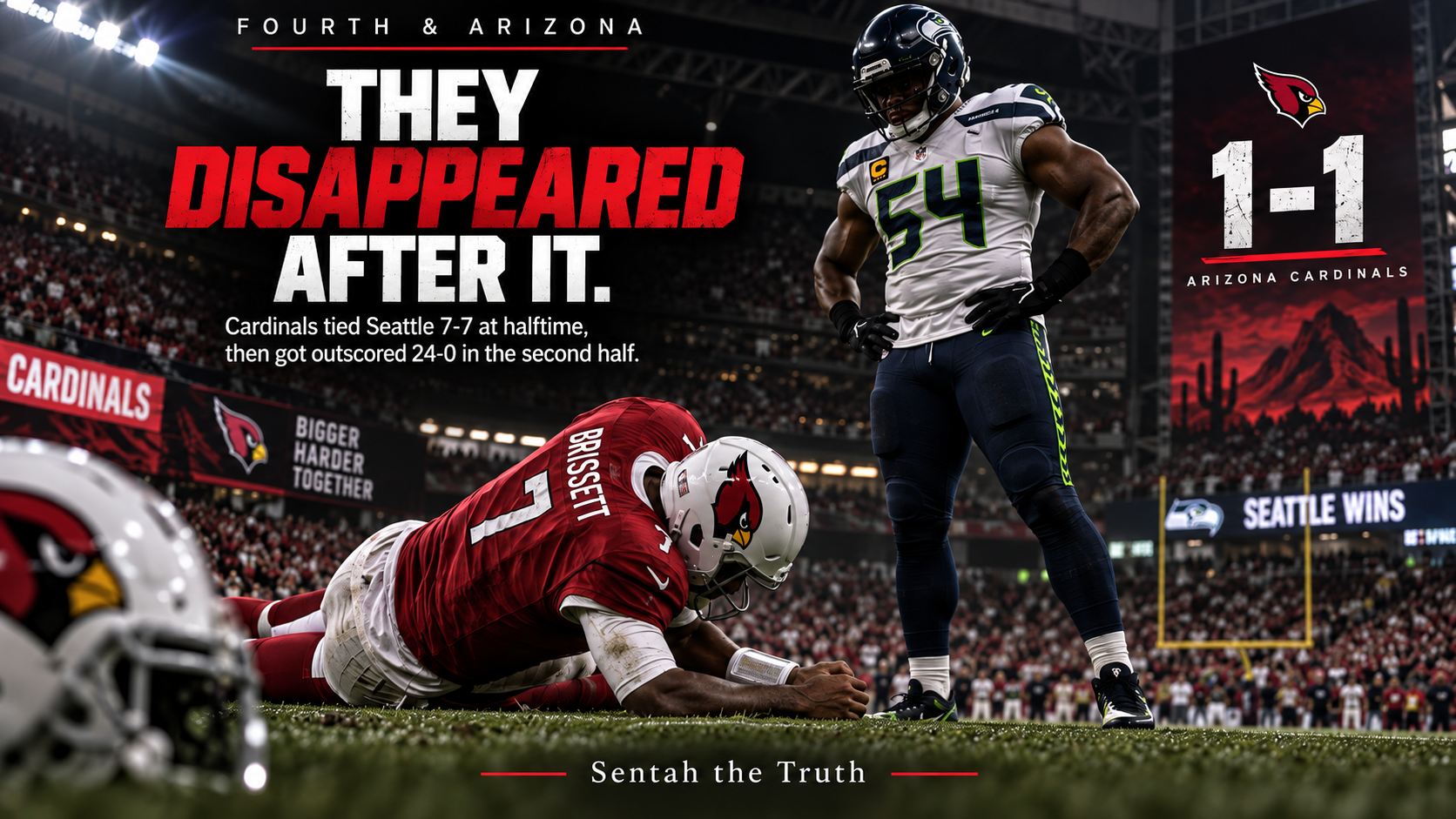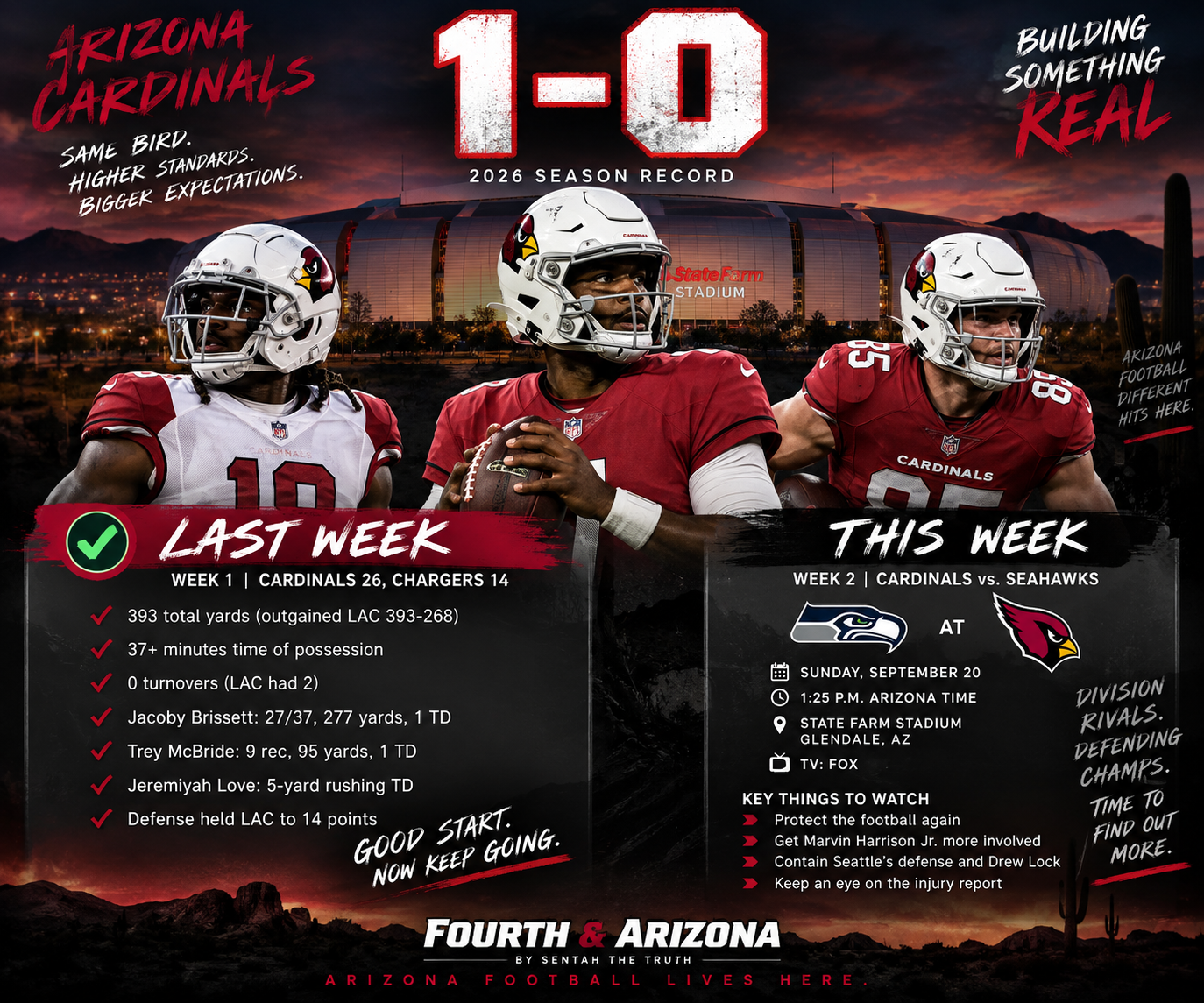
Welcome to the NFC West.
The Arizona Cardinals enter the 2026 season coming off a 3–14 record.
That is bad enough.
They also went 0–6 inside their own division.
That becomes considerably more understandable when you look around.
Seattle went 14–3.
The Rams went 12–5.
San Francisco went 12–5.
Three teams. Thirty-eight wins.
Arizona had three.
This probably isn’t the season to start printing NFC West championship banners.
That doesn’t mean the season doesn’t matter.
In some ways, it matters more.
Because the useful question isn’t whether Arizona is better than Seattle, Los Angeles and San Francisco right now.
It’s whether the Cardinals are building a team that eventually can be.
Start with the quarterback
Jacoby Brissett enters the season as Arizona’s starting quarterback.
He has played a lot of NFL football. He can run an offense. He can give a new coaching staff a veteran behind center while Mike LaFleur installs his system.
All of that has value.
It also doesn’t necessarily make him the quarterback who will be standing there when this rebuild is supposed to be finished.
Arizona used the 65th pick in the draft on Carson Beck.
You don’t have to declare Beck the future after a few preseason throws. That’s a pretty good way to turn a third-round rookie into the next August Hall of Famer.
Let him develop.
Let him learn.
And when the Cardinals believe he’s ready, let him play.
Because at some point every NFL rebuild runs into the same question:
Do we have the quarterback?
Maybe Beck is the answer.
Maybe he isn’t.
Finding out would still qualify as progress.
The problem is everybody else is already there
Normally, a rebuilding team can look around its division and find another franchise fumbling around in the same junk drawer.
Not Arizona.
Seattle is coming off a 14-win season and a Super Bowl championship.
The Rams won 12 games and have Matthew Stafford coming off an MVP season.
The 49ers also won 12 and have Brock Purdy, who has already taken them to a Super Bowl.
Arizona has Brissett today and Beck as a possible tomorrow.
That’s not an insult.
It’s a timeline.
The Cardinals aren’t at the same point in the construction project as the other three teams.
Pretending otherwise doesn’t make the house go up faster.
So what would progress actually look like?
Obviously, winning more than three games would be a nice place to start.
Going 0–6 in the division again would not exactly scream progress either.
But Arizona can get significantly better and still finish fourth in this NFC West.
Both things can be true.
The questions underneath the record may tell us more.
Can the offensive line become stable?
Can Marvin Harrison Jr. become the difference-maker Arizona drafted him to be?
Can Trey McBride continue playing like one of the best tight ends in football?
Can Jeremiyah Love — the third overall pick in the draft — become another cornerstone of the offense?
Can the defense develop enough young talent and depth to hold up over an entire NFL season?
And somewhere along the way, can Carson Beck give this franchise reason to believe it may have finally found an answer at quarterback?
Those answers matter.
Because 2026 doesn’t have to end with a playoff berth to move the Cardinals forward.
Rebuilding is not the same thing as losing
NFL fans have heard the word “rebuild” abused enough that sometimes it seems to mean:
Please keep buying tickets while we lose.
That’s not good enough.
A real rebuild leaves evidence.
Young players improve.
Draft picks become starters.
Weak position groups become competent.
The quarterback picture gets clearer.
Close losses start becoming wins.
Division games stop looking like scheduled dental work.
Eventually, the standings change.
Arizona doesn’t need to catch all three NFC West powers in September.
It does need to start closing the distance.
Last year there wasn’t much ambiguity.
Seattle, Los Angeles and San Francisco were fighting over the division.
Arizona was somewhere in the rearview mirror.
This season should tell us whether the Cardinals have at least gotten close enough to read the license plates.