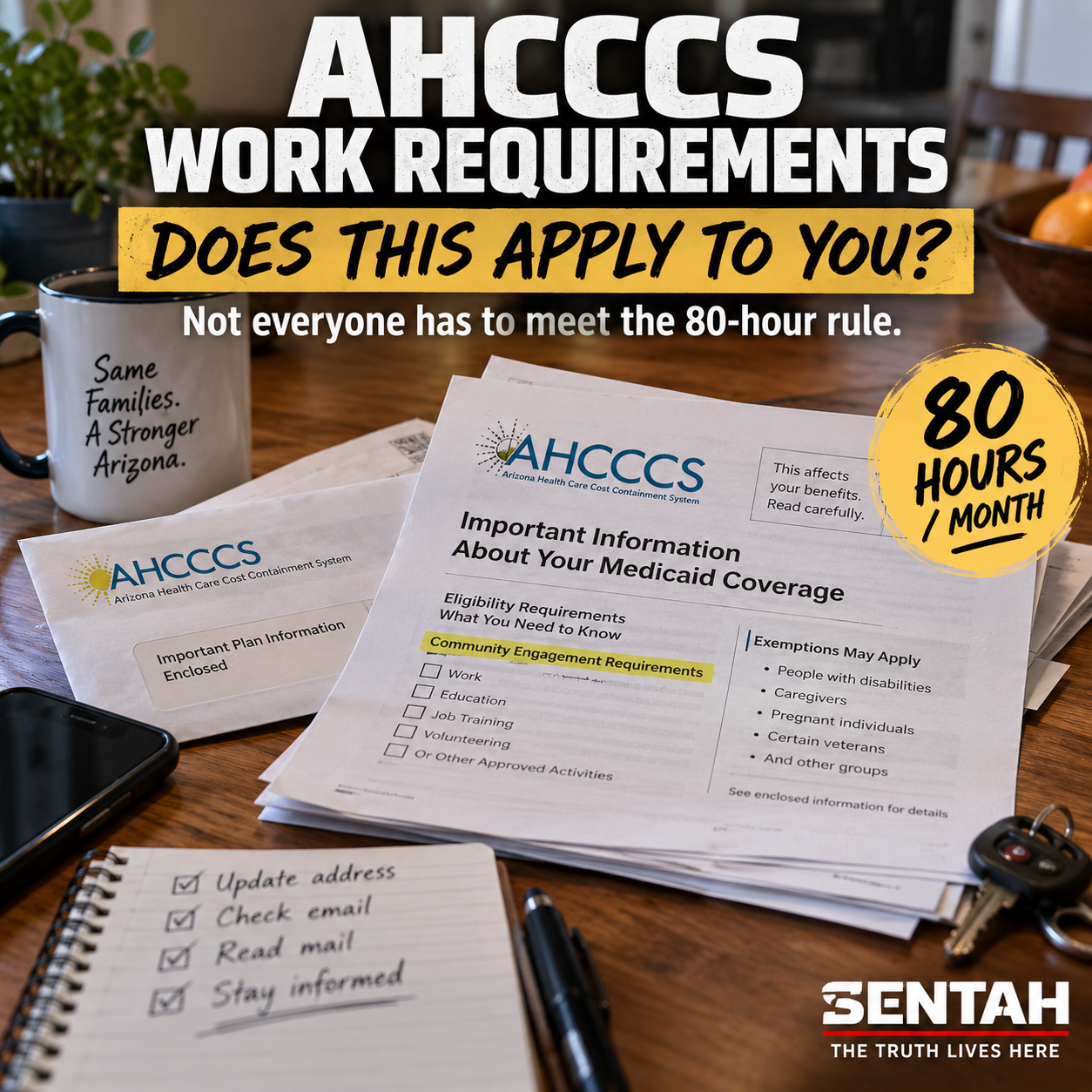
For a family caring for a child with significant disabilities, an approved hour of care is not an abstract number on a government form.
It can mean help with bathing or toileting. It can mean someone is there to keep a child safe while a parent makes dinner, takes another child to school or goes to work. For some families, those hours are part of what makes it possible to keep caring for a child at home.
That is why two separate Arizona Medicaid processes unfolding this month deserve the attention of disability families — even if terms like “Section 1115 Demonstration” and “HCBS Needs Tool” make them easy to ignore.
The first deadline is almost here.
Arizona’s Medicaid agency, the Arizona Health Care Cost Containment System, or AHCCCS, is accepting public comments through Sunday, September 6, on its proposed five-year renewal of Arizona’s Section 1115 Medicaid Demonstration.
The waiver is much bigger than disability services alone. It is part of the legal framework that gives Arizona flexibility in operating its Medicaid program and currently supports programs ranging from KidsCare expansion to housing initiatives and reentry services.
But one piece is particularly important for Arizona’s disability community: the waiver also provides authority for home- and community-based services through the Arizona Long Term Care System, or ALTCS.
Those are services designed to help eligible people receive long-term care in their homes and communities rather than relying solely on institutional settings.
AHCCCS is asking the federal Centers for Medicare & Medicaid Services to renew Arizona’s waiver for another five years, from October 2027 through September 2032.
And buried among the proposed additions is something disability families following Arizona’s ongoing care-assessment fight will recognize immediately.
AHCCCS is seeking federal authority for an “extended review timeline” for Extraordinary Care Reviews involving children receiving home- and community-based services.
The Extraordinary Care Review, commonly called ECR, is connected to Arizona’s HCBS Needs Tool, or HNT.
The HNT is intended to assess direct-care and habilitation needs. For children under 18, the ECR provides an additional clinician-based review when a family believes the HNT’s age limitations or habilitation service caps do not adequately reflect the child’s actual care needs.
That system has already had a turbulent history.
AHCCCS launched a new HNT on October 1, 2025. After concerns from families and the disability community, the state paused its use for children under 18 later that month. Gov. Katie Hobbs directed AHCCCS to revise the process and create an exception mechanism.
AHCCCS says it subsequently received more than 4,600 public comments while working on revisions.
The process is still not finished.
An informal review period on revised HNT and ECR policies ended August 21. According to AHCCCS’s current timeline, a separate, formal 30-day public-comment period is scheduled to begin in mid-September as part of the state’s exempt rulemaking process.
AHCCCS expects that rulemaking to conclude in October, with final HNT and ECR policies expected in October or November.
The new policies are currently scheduled to take effect in December.
That means Arizona disability families are looking at two different opportunities for public input this month.
The first concerns Arizona’s much broader Medicaid waiver renewal and closes September 6.
The second will concern the HNT and ECR rules themselves and is expected to open in mid-September.
The distinction matters.
Submitting a comment on the waiver is not the same thing as participating in the upcoming HNT/ECR rulemaking process. Families concerned about both may want to participate in both.
It also matters because these policies are not merely arguments between state agencies, lawmakers and advocacy organizations.
Eventually, they reach someone's kitchen table.
A parent may be asked how much assistance a child needs with dressing, eating, bathing, mobility or toileting. A family may have to explain why a standardized assessment does not capture the supervision or hands-on support their child actually requires.
And somewhere downstream from those questions is a decision about services.
AHCCCS says the purpose of its HNT/ECR rulemaking is to create clarity and consistency without disrupting access to medically necessary care. The agency also acknowledges that some service-assessment outcomes could be different once the new rules are implemented.
That is one reason families should pay attention before the process is finished rather than after a decision affects their household.
Public comment does not guarantee that government officials will make the decision a commenter wants.
But it does put families’ experiences into the official record while the rules are still being considered.
For the Section 1115 waiver renewal, AHCCCS is accepting written comments through September 6 at [email protected].
Comments can also be mailed to:
AHCCCS
c/o Division of Public Policy and Strategic Planning
150 N. 18th Ave.
Phoenix, AZ 85007
Families following the HNT and ECR changes should watch for AHCCCS to announce the opening of the separate formal comment period expected in mid-September.
Sentah the Truth will continue following that process as the proposed rule is released and the December implementation date approaches.
Because behind every acronym, assessment tool and rulemaking notice is something much simpler:
A family trying to make sure the person they love gets the care they need.