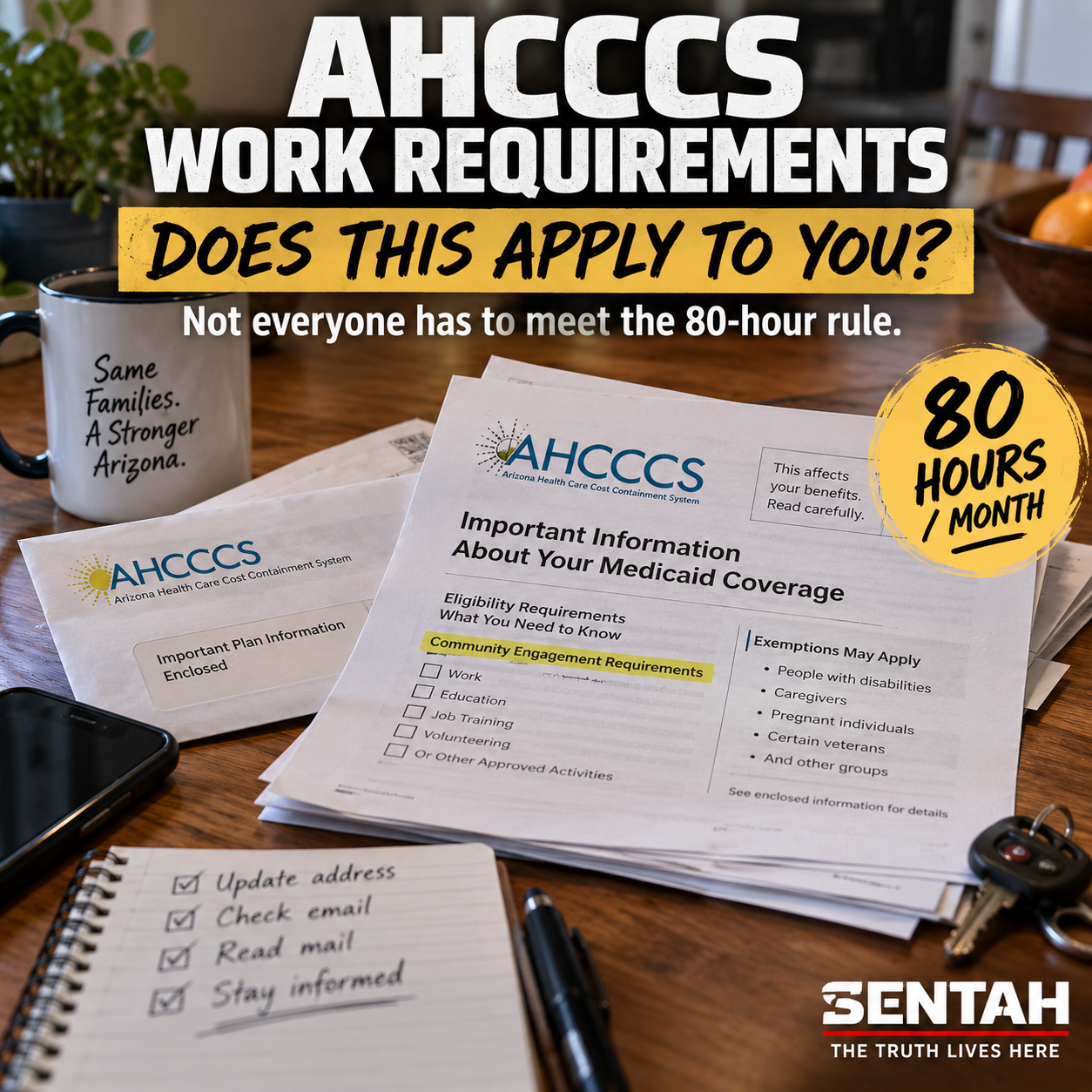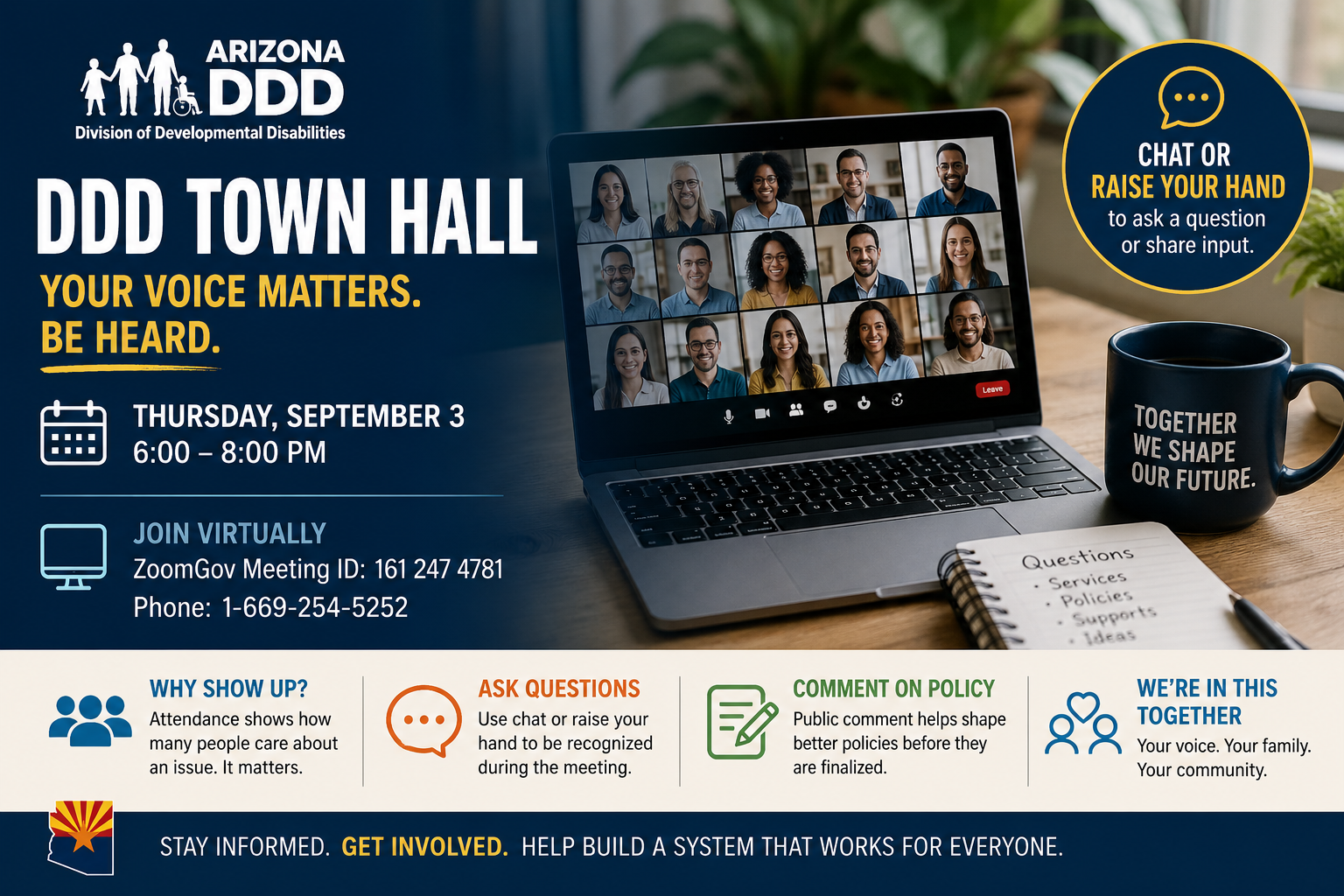
If you spend any time around Arizona disability policy, you’ve probably seen it.
PUBLIC COMMENT IS OPEN.
Maybe you saw it here.
Maybe Raising Voices or another advocacy group posted a call to action.
Maybe somebody dropped a government policy into a Facebook group along with a deadline and a link and everybody was apparently supposed to know what the hell to do next.
Comment on what?
How long does it need to be?
Do I have to understand the entire policy?
Am I supposed to sound like a lawyer?
Does anybody actually read these things?
And maybe the biggest one:
What if I just don’t feel comfortable doing it?
On Monday, Sept. 14, AHCCCS is holding a Community Policy Workshop specifically to help with that.
https://www.azahcccs.gov/CommunityPresentations
Not to tell you what opinion you’re supposed to have.
To show you how the process works and how to participate in it.
That might sound pretty basic.
For a lot of people, it isn’t.
Government policy isn’t exactly beach reading
There are acronyms.
Then there are acronyms explaining other acronyms.
There are cross-references, revision marks and sentences where changing one word from shall to may can actually matter.
It’s not exactly designed to make somebody sitting at the kitchen table think:
Yep. I got this.
And that’s where a lot of people stop.
Not because they don’t care.
Because they aren’t sure they know enough.
AHCCCS says the public, stakeholders and tribal members can comment on proposed policy changes. For substantial changes to its major policy manuals, the agency generally provides up to a 45-day comment period.
But saying you’re allowed to comment and making somebody comfortable enough to actually comment are two different things.
Advocacy groups make this easier
Groups like Raising Voices regularly put out calls to action when something important is happening.
They’ll explain the issue.
Tell you who to contact.
Give you the deadline.
Sometimes they’ll give you talking points.
Sometimes they’ll even give you a sample public comment or email template.
And there’s nothing wrong with using one.
Seriously.
Most disability families aren’t sitting around on a Tuesday night thinking:
You know what sounds relaxing? Medicaid policy.
There are appointments. School. Therapies. Medications. Dinner. Laundry.
Life.
Sometimes having somebody say here’s what is happening, here’s why it matters and here’s where you send your comment is exactly what people need.
But there can still be another hesitation.
What if you don’t want to sound like everybody else?
Maybe you’ve opened one of those templates and agreed with every word.
But it still didn’t sound like you.
Maybe your family’s experience is different.
Maybe you have another concern.
Or maybe you just don’t want your comment to look like you copied and pasted the same paragraph 80 other people sent.
That’s fair.
Templates are useful.
They’re a starting point.
They don’t have to become your voice.
And maybe understanding the process better gives you enough confidence to write something that actually sounds like you.
Something as simple as:
Here’s what concerns me.
Here’s what this would mean for my family.
Here’s something I don’t think the policy accounts for.
Here’s what I think would work better.
That’s a public comment.
You don’t need to sound like an attorney.
You don’t need to know every AHCCCS acronym.
And you definitely don’t have to write like you’re submitting a term paper.
Actually, please don’t have ChatGPT generate 300 identical comments and send them to AHCCCS.
We’ve all suffered enough.
Your experience might be the piece they’re missing
This matters particularly in disability policy.
A policy can look perfectly reasonable sitting on a computer screen.
Then somebody has to live under it.
The people writing the policy may understand federal Medicaid requirements, reimbursement structures and administrative rules better than you do.
You may understand something they don’t.
What Tuesday morning actually looks like in your house.
What happens when the caregiver doesn’t show.
What happens when service hours don’t match actual need.
What another assessment means for your family.
What transportation really looks like.
What happens at 2 a.m. when the policy document is sitting peacefully on a government server and your kid still needs care.
That’s not less important because it didn’t come from a policy analyst.
That’s information too.
Sometimes it’s the information government needs most.
And yes, somebody actually reads the comments
AHCCCS says submitted comments are reviewed.
That doesn’t mean the agency has to agree with you.
It doesn’t mean 500 comments automatically kill a proposal.
It doesn’t mean somebody is going to personally write you back and tell you that you made an excellent point.
But AHCCCS says comments are reviewed and suggestions may result in changes to the final policy.
That’s the point.
You’re getting your experience into the record while the policy is still being shaped.
Complaining six months after everything is final might feel good.
Commenting while somebody can still change it has a little more potential.
The timing on this workshop is pretty damn good
This isn’t training for some imaginary public-comment period next year.
AHCCCS currently says another formal 30-day public-comment period involving the Home and Community Based Services Needs Tool and Extraordinary Care Review — HNT and ECR — is expected to begin in mid-September.
So somebody could attend this workshop on Monday, learn how the process works, and have a chance to use that knowledge almost immediately.
For families following HNT and ECR, that’s worth knowing.
And even if you have absolutely no interest in commenting on those particular policies, another issue will come.
There is always another issue.
Maybe you’ve never done this before
Good.
That’s kind of who this workshop seems made for.
Maybe you’ve seen our articles saying public comment is open and thought:
Yeah, somebody should probably comment on that.
Maybe you’ve seen an advocacy group’s template and thought:
I agree. I just don’t know if I want to send somebody else’s words.
Maybe you’ve started writing your own comment and deleted it because you weren’t sure whether you were doing it right.
This is an opportunity to learn.
Not how to have the correct opinion.
Not how to sound like everybody else.
How the system works.
Because the next time you see:
PUBLIC COMMENT IS OPEN
it shouldn’t feel like an invitation meant for somebody who knows more than you.
It was meant for you too.
And your comment doesn’t need to sound perfect.
It probably just needs to sound like you.